Chinese Construction Machinery Is Quietly Taking Over Global Markets – And the World Is Taking Notice

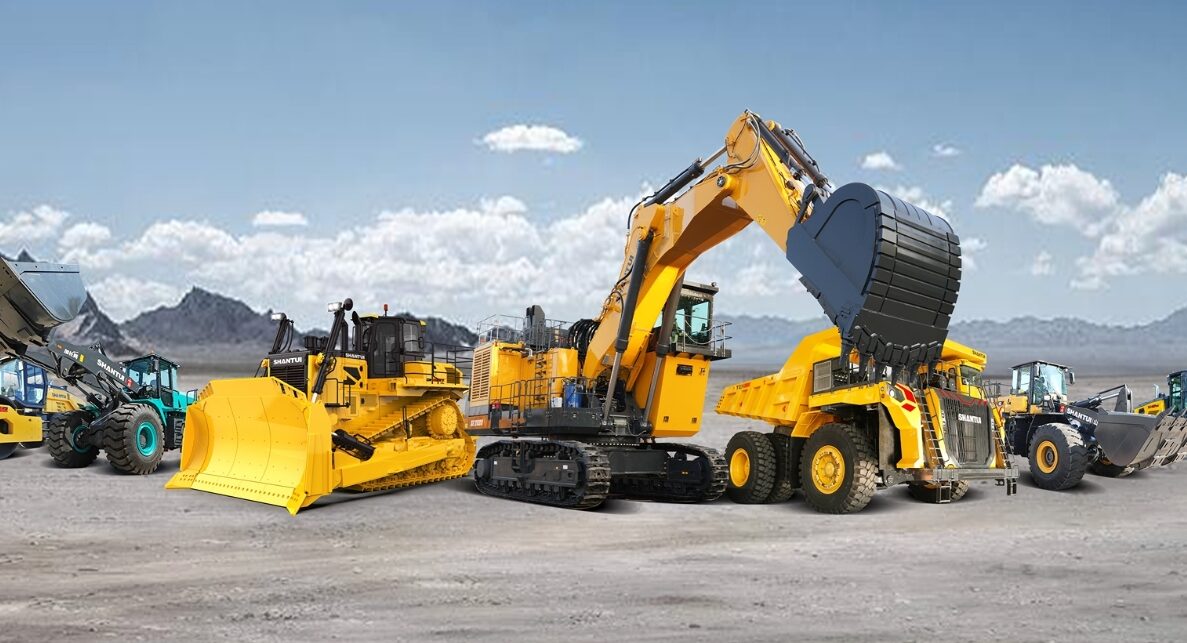
For years, the global construction equipment industry was dominated by a familiar set of names: Caterpillar, Komatsu, Hitachi, Volvo. But a quiet shift has been underway – and it’s no longer quiet. Chinese OEMs are systematically capturing market share from foreign brands across every major region, and international customers are increasingly embracing Chinese equipment as a first-choice option.
The Numbers Tell the Story
In 2025, China’s construction machinery export value reached a record high of $59 billion, up 11.5% year-over-year (Source: China Construction Machinery Association – CCMA). In the first 11 months alone, growth hit 12.4% (Source: CCMA). The full-year figure, including parts and complete machines, reached $60.23 billion, a 13.9% increase from 2024 (Source: China Chamber of Commerce for Import & Export of Machinery and Electronic Products – CCCME). This marks a near-tripling of export scale between 2020 and 2025 (Source: CCMA & CCCME). In the first four months of 2026 alone, exports reached RMB 152.3 billion ($21 billion), up 18% year-over-year (Source: CCMA).
More importantly, exports are no longer a side business – they are the primary profit engine for leading Chinese manufacturers. In 2025, the five largest Chinese construction machinery OEMs generated 55% of their revenue and 65% of their gross profit from overseas markets (Source: Zheshang Securities research report).
Global Rankings Are Shifting Fast
According to KHL Group’s 2026 Yellow Table (based on 2025 fiscal year sales), 13 Chinese companies made the global Top 50 – more than any other country, surpassing the United States (6) and Japan (11) (Source: KHL Yellow Table 2026). Collectively, Chinese firms captured 20.4% of the global market, up 1.7 percentage points from the previous year (Source: KHL Yellow Table 2026).
The individual rankings are even more striking:
· XCMG ranked #3 globally with $14.2 billion in sales and 5.8% market share – the first Chinese brand ever to break into the global top three (Source: KHL Yellow Table 2026).
· Sany Heavy Industry ranked #6 with $12.58 billion in sales (Source: KHL Yellow Table 2026).
· Zoomlion ranked #11 with $6.81 billion in sales (Source: KHL Yellow Table 2026).
Together, XCMG, Sany, and Zoomlion accounted for 13.7% of the global Top 50 market (Source: calculated from KHL Yellow Table 2026).
The “Overseas-First” Reality
Perhaps the most telling metric is how dependent Chinese OEMs have become on international markets – and how successfully they are competing abroad.
· Sany generated $7.83 billion in international revenue in 2025, accounting for 64% of its total revenue – up from just 23% in 2021 (Source: Sany Heavy Industry 2025 annual report). Africa alone grew 55% year-over-year, reaching $1.16 billion (Source: Sany Heavy Industry 2025 annual report). The company’s overseas gross profit margin reached 31.7%, significantly higher than domestic levels (Source: Sany Heavy Industry 2025 annual report).
· Zoomlion posted international revenue of RMB 30.5 billion ($4.2 billion) in 2025, up 30.5% year-over-year, accounting for 58.56% of total revenue (Source: Zoomlion 2025 annual report). In Q4 2025 alone, overseas revenue surged 60% (Source: Zoomlion 2025 annual report).
· XCMG saw overseas revenue rise 16.58% to RMB 48.6 billion ($6.7 billion), making up 48.2% of total revenue (Source: XCMG 2025 annual report).
For all 13 Chinese companies on the KHL Top 50, overseas sales averaged 41.94% of total revenue, with the highest exceeding 77% (Source: calculated from KHL Yellow Table 2026 and respective company annual reports).
From “Product Export” to “Industry Going Global”
Chinese manufacturers have moved far beyond simply shipping containers overseas. The industry has shifted from “product export” to full-fledged “industry globalization”. Leading players are building local factories, establishing R&D centers, and deploying service networks worldwide.
Sany now covers more than 150 countries and regions, with over 400 overseas dealers, 1,900 service points, and more than 3,000 overseas service engineers (Source: Sany Heavy Industry annual report). XCMG, Sany, and others have built overseas production capacity exceeding 20% of total output (Source: China Machinery Industry Federation – CMIF). Localization rates at overseas facilities have reached 60% in some cases, effectively mitigating trade barriers (Source: industry analysis reports, based on company disclosures).
The World Is Buying In – Literally
International customers are no longer treating Chinese equipment as a “budget alternative.” They are choosing it on performance, reliability, and value.
Chinese excavators achieved a 23% global market share in 2025, with exports exceeding domestic sales for the first time at 118,518 units (Source: CCMA). Excavator exports grew 30.4% in value to $10.72 billion, becoming the #1 export category (Source: CCMA). The export share of excavators as a percentage of total sales reached approximately 49.6%, while loaders hit 48.2% (Source: CCMA).
Regionally, the penetration is even more dramatic:
· Africa: Exports surged 50.5% in 2025 to $8.89 billion (Source: CCCME). In the first half alone, exports to Africa reached $4 billion, up 51.6% (Source: CCCME). Chinese brands now dominate over 75% of excavator and loader imports in key African markets (Source: CCMA & local customs data).
· Southeast Asia: Indonesia, the Philippines, Vietnam, and Malaysia are all top-15 destinations for Chinese excavator exports, with Indonesia alone importing $1.02 billion (Source: CCMA). In Indonesia, Chinese brands account for nearly 70% of excavator imports (Source: CCMA & Indonesian customs data).
· “Belt and Road” markets: Exports to BRI countries reached $22.85 billion in 2025, accounting for 47.1% of total exports (Source: CCCME). Growth in the Middle East, ASEAN, and Africa ranged from 49% to 70% (Source: CCCME).
What This Means
The data is unequivocal: Chinese construction machinery has transitioned from a domestic powerhouse to a genuine global force. In less than a decade, Chinese brands have gone from single-digit global share to commanding positions in nearly every major market. More importantly, the shift is structural – not cyclical. Local production, service networks, and brand recognition are creating durable competitive advantages that will only deepen.
The world’s construction sites are increasingly yellow – but not just Caterpillar yellow anymore. They are Sany red, XCMG gold, and Zoomlion green. And international customers are not just accepting it – they are asking for it.
—
Source Abbreviation Key (full names):
· CCMA – China Construction Machinery Association
· CCCME – China Chamber of Commerce for Import & Export of Machinery and Electronic Products
· KHL Yellow Table 2026 – KHL Group’s annual ranking (based on 2025 revenue)
· Zheshang Securities – Zheshang Securities research reports on construction machinery
· Sany Heavy Industry – Company 2025 annual report
· Zoomlion – Company 2025 annual report
· XCMG – Company 2025 annual report
· CMIF – China Machinery Industry Federation